Skip to Main Content

This article outlines how to identify, invite and apply a person-centred framework to support structured medication review.

Structured medication reviews

NHS England’s structured medication reviews (SMRs) are a NICE-approved, person-centred intervention to optimise medicines use and improve patient outcomes. It involves a comprehensive review of a patient’s medicines and is facilitated through conversations with patients and a shared decision making process.

Prioritising patients for structured medication review

The Network Contract Direct Enhanced Services (DES) requires each Primary Care Network (PCN) to prioritise people who:

  • are residents in care homes
  • have learning disabilities
  • are on complex and problematic polypharmacy, especially those prescribed 10 or more medicines
  • are taking medicines associated with medication errors and risk of harm
  • are severely frail, isolated, or housebound or who have had recent hospital admissions and/or falls
  • are taking potentially addictive medications such as opioids, gabapentinoids, benzodiazepines and Z-drugs.

Priority groups are likely to include patients with multiple long-term conditions or co-morbidities, particularly those with respiratory or cardiovascular diseases, as well as those who have undergone a comprehensive geriatric assessment.

Additionally, other patients may need to be reactively referred for SMRs based on specific clinical needs or concerns.

Inviting patients for a structured medication review

Once a patient is identified for an SMR, invite them with a clear explanation of the process. Clearly outline that the review involves a shared decision-making conversation to assess their medications, ensure they remain effective and are still appropriate for their needs. Encourage them to bring their medications to the appointment and prepare any questions or concerns they want to discuss.

The Health Innovation Network’s resources to support patients having an SMR  are available in various community languages.

Structured medication review framework

The SMR framework ensures that a patient’s medicines are both effective and aligned with their individual needs. By adopting a person-centred approach, it aims to reduce inappropriate polypharmacy while prioritising the individual’s health goals and preferences. The framework follows a seven-step process, adapted from established polypharmacy, multimorbidity and frailty guidelines (available from BMJ):
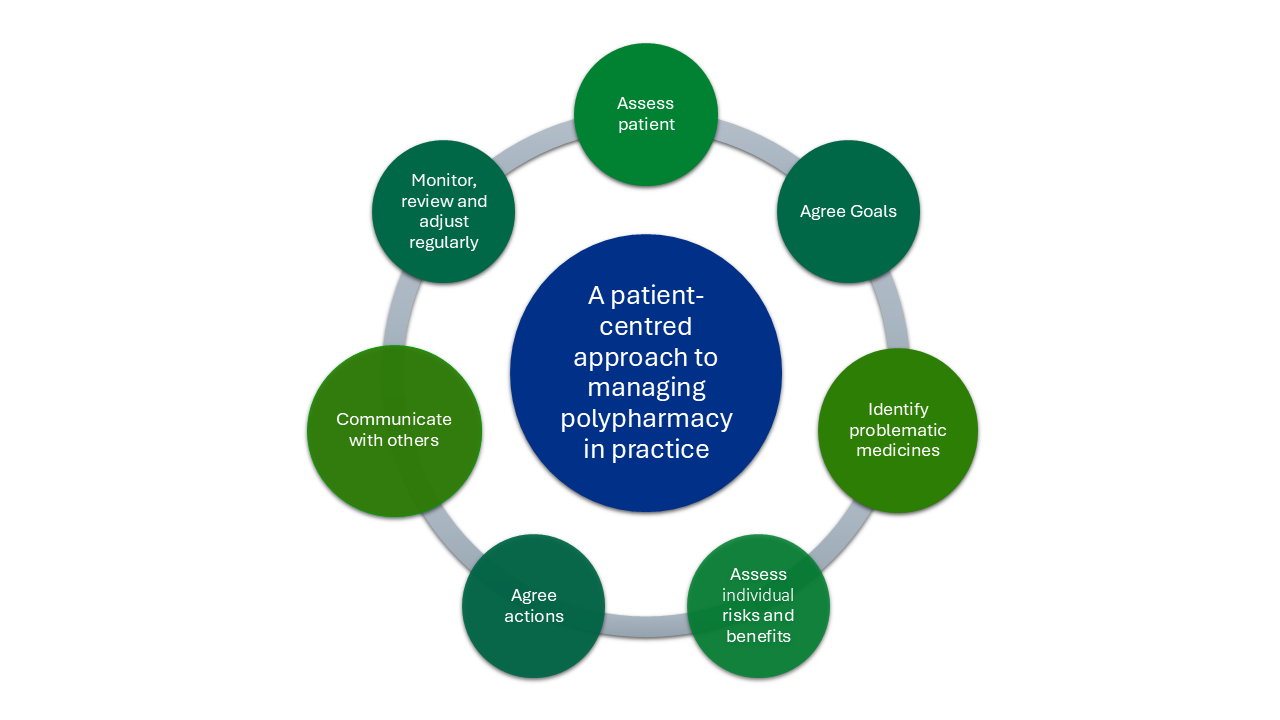
Circular diagram showing “A patient-centred approach to managing polypharmacy in practice” in the centre, surrounded by seven steps: Assess patient; Agree Goals; Identify problematic medicines; Assess individual risks and benefits; Agree actions; Communicate with others; Monitor, review and adjust regularly.

  1. Actions include:

    • gather medical, social, and medication histories from health records and functional details from the patient or carer
    • reconcile medicines to confirm what they are taking and how
    • explore how medicines align with the patient’s health goals, functionality, life expectancy, and frailty
    • assess if the patient is frail or has a shortened life expectancy
    • discuss which medicines matter to the patient or carer, address issues, and understand how medicines fit into their daily routines.
  2. Agree the medicine-related issues and benefits the patient or carer wants to be addressed, based on what matters most to them.

  3. Consider all the medicines according to the best available evidence.

    Use evidence-based tools such as STOPP/START or STOPPFrail. See Tools to support medication review (SPS page) for further information.

  4. Initial discussion

    For each medicine reviewed, discuss the:

    • potential and actual benefit
    • risk of harm
    • medicine and non-medicine alternatives

    Consider the person’s perspective

    For each medication, consider the patient’s perspective:

    • tailor each medicine to the patient’s clinical needs, social circumstances, and co-morbidities
    • prioritise the patient’s preferences and capacity to adhere to the agreed regimen
    • evaluate the risks and benefits, factoring in the patient’s overall circumstances, including life expectancy.

    To help patients prepare for shared decision-making conversations, use tools such as the Advancing Quality Alliance Ask 3 questions leaflet, Choosing Wisely UK’s BRAN questions and the three-talk model (available from BMJ).

    See Tools to support medication review (SPS page) for further information. 

  5. If agreed to deprescribe medicines with the patient or carer, use credible withdrawal or tapering algorithms or deprescribing guidance.

    See Tools to support medication review (SPS page) for further information.

    Actions include agreeing a way forward with the patient, ensuring they clearly understand the plan.

  6. Actions include:

    • Present options to the prescriber in a clear, simple format if no immediate prescribing action is taken.
    • Provide a written summary to the prescriber or patient record, outlining the rationale, agreed actions, and monitoring plan; share with the patient when appropriate.
    • Share the summary with community pharmacists, social care teams, allied health professionals, care home staff, or hospital clinicians as needed.
    • Follow local consent and governance guidelines to ensure relevant parties can access the information appropriately.


  7. Actions include:

    • Explain the monitoring process, specifying who will monitor the patient and when.
    • Notify relevant professionals about any changes made or actions required, ensuring patient consent where appropriate.
    • Clearly document changes, agreed actions, and next steps, particularly if no prescription is issued.

Update history

  1. Further information section removed, as information available elsewhere in article. Three-talk model link updated. Minor formatting updates.
  1. Added 7 steps of polypharmacy infographic.
  1. Republished
  2. Full review and update of article. Originally published 12th January 2022.
  1. Published